865 Real Estate

East Tennessee Real Estate & Neighborhood Source

  • Home
  • Search Property
    • Search ALL East Tennessee Real Estate Listings
    • Search East Tennessee Lots & Land for sale
    • East Tennessee Homes for Sale with Acreage (5+ acres)
    • East Tennessee Land for Sale with Acreage (5+ Acres)
    • Search Homes For Sale by Zip Code
    • SEARCH Homes for Sale In Farragut TN
      • Homes for sale in Farragut under $150,000
      • Homes for sale in Farragut $150,000-$275,000
      • Homes for sale in Farragut $275,000-$325,000
      • Homes for sale in Farragut $325,000-$425,000
      • Homes for sale in Farragut $425,000-$550,000
      • Homes for sale in Farragut $550,000-$700,000
      • Homes for sale in Farragut $700,000 – $1 Million
      • Homes for sale in Farragut $1 Million and up
      • Condos for sale in Farragut
    • Farragut Homes For Sale By Neighborhood
      • Homes for sale in Altamira Subdivision
      • 5 Bedroom Homes For Sale in Farragut TN
      • Homes for sale in Andover Subdivision
      • Homes for sale in Baldwin Park Subdivision
      • Homes for sale in Berkeley Park Subdivision
      • Homes for sale in Bridgemore Subdivision
      • Homes for Sale in Brixworth Subdivision
      • Homes for Sale in Chapel Glen Subdivision
      • Homes for sale in Concord Hills Subdivision
      • Homes for sale in Cottage Creek Subdivision
      • Homes for sale in Farragut Crossing Subdivision
      • Homes for sale in Farragut Intermediate School Zone
      • Homes for sale in Farragut Primary School Zone
      • Homes for sale in Fort West Subdivision
      • Homes for sale in Fox Den Subdivision
      • Homes for sale in Fox Run Subdivision
      • Homes for sale in Glen Abbey Subdivision
      • Homes for sale in Hickory Woods Subdivision
      • Homes for sale in Inverness Subdivision
      • Homes for sale in Kingsgate Subdivision
      • Homes for sale in McFee Manor Subdivision
      • Homes for sale in Northshore Elementary School Zone in Knoxville, TN
      • Homes for sale in Oakley Downs Subdivision
      • Homes for Sale in Old Stage Hills Subdivision
      • Homes for sale in Rockwell Farm Subdivision
      • Homes for Sale in Saddle Ridge Subdivision
      • Homes for sale in Saint Charles at Grigsby Chapel Subdivision
      • Homes for Sale in Sedgefield Subdivision
      • Homes for Sale in Sheffield Subdivision
      • Homes for sale in Smithfield Subdivision
      • Homes for sale in Sugarwood Subdivision
      • Homes for sale in Sweet Briar Subdivision
      • Homes for sale in The Cove at Turkey Creek Subdivision
      • Homes for Sale in Turkey Creek Woods Subdivision
      • Homes for sale in Vista Subdivision
      • Homes for sale in Weatherly Hills Subdivision
      • Homes for sale in Wentworth Subdivision
      • Homes for sale in Wood Harbor Subdivision
      • Homes for sale in Woodchase Subdivision
      • Homes for sale in Wyndham Hall Subdivision
    • Homes Recently Sold in Farragut, TN
    • Search Knoxville Area Neighborhoods
      • Knoxville Homes For Sale By Neighborhood: Autumn Place Subdivision
      • Knoxville Homes For Sale By Neighborhood: Bakertown Village Subdivision
      • Knoxville Homes For Sale By Neighborhood: Ball Ridge Subdivision
      • Knoxville Homes For Sale By Neighborhood: Bent Creek Subdivision
      • Knoxville Homes For Sale By Neighborhood: Bent Tree Subdivision
      • Knoxville Homes For Sale By Neighborhood: Bentley Park Subdivision
      • Knoxville Homes for Sale in Admiral’s Landing
      • Knoxville Homes for Sale in Alderwood Court Subdivision
      • Knoxville Homes For Sale in Amberleigh Subdivision
      • Knoxville Homes for Sale in Amberwood Subdivision
      • Knoxville Homes For Sale in Andover Court Subdivision
      • Knoxville Homes For Sale in Andrews Landing Subdivision
      • Knoxville homes for sale in Ansley Woods Subdivision
      • Knoxville Homes For Sale in Arbor Gate Subdivision
      • Knoxville Homes for Sale in Atlee Fields
      • Knoxville Homes for sale in Augusta Hills
      • Knoxville homes for sale in Autumn Ridge
      • Knoxville homes for sale in Bailey Park
      • Knoxville homes for sale in Bakertown Woods
      • Knoxville homes for sale in Bayou Bend
      • Knoxville homes for sale in Bayview West
      • Knoxville homes for sale in Belmont West
      • Knoxville homes for sale in Benington
      • Knoxville homes for sale in Bennett Place Subdivision
      • Knoxville homes for sale in Bexhill
      • Knoxville homes for sale in Bishops Court
      • Knoxville homes for sale in Braddocks Place
      • Knoxville homes for sale in Brandywine at Turkey Creek
      • Knoxville homes for sale in Breakers at Riversound
      • Knoxville homes for sale in Campbell Station Villas
      • Knoxville homes for sale in Cascade Falls
      • Knoxville Homes for Sale in Cavet Station
      • Knoxville homes for sale in Cherokee Springs
      • Knoxville homes for sale in Chesney Hills
      • Knoxville homes for sale in Chestnut Grove
      • Knoxville Homes for Sale in Choto Fields Subdivision
      • Knoxville Homes for Sale in Copperstone
      • Knoxville Homes for Sale in Cottington Court
      • Knoxville Homes for Sale in Cove Point
      • Knoxville Homes for Sale in Craig Cove
      • Knoxville Homes for Sale in Crestwood Hills
      • Knoxville Homes for Sale in Deane Hill
      • Knoxville homes for sale in Denton Place
      • Knoxville Homes for Sale in Dogwood Cove
      • Knoxville Homes for Sale in Dogwood Trails
      • Knoxville Homes for Sale in Dunbarton Oaks
      • Knoxville Homes for Sale in Duncans Glen
      • Knoxville Homes for Sale in Eagle Glen Subdivision
      • Knoxville Homes for Sale in Echo Valley Subdivision
      • Knoxville Homes for Sale in Falcon Pointe
      • Knoxville Homes for Sale in Falling Waters
      • Knoxville Homes for Sale in Farrington
      • Knoxville Homes for Sale in Forest Brook
      • Knoxville Homes for Sale in Fox Creek
      • Knoxville Homes for Sale in Foxfire
      • Knoxville Homes for Sale in Foxvue
      • Knoxville Homes for Sale in Franklin Hill
      • Knoxville Homes for Sale in Galewood
      • Knoxville Homes for Sale in Gallaher Station
      • Knoxville Homes for Sale in Gettysvue
      • Knoxville Homes for Sale in Glen Arden
      • Knoxville Homes for Sale in Glenview
      • Knoxville Homes for Sale in Gulf Park
      • Knoxville Homes for Sale in Gulfwood Subdivision
      • Knoxville Homes for Sale in Hamilton Place Subdivision
      • Knoxville Homes for Sale in Hampton Hall Subdivision
      • Knoxville Homes for Sale in Harrison Keepe Subdivision
      • Knoxville Homes for Sale in Hawks Landing Subdivision
      • Knoxville Homes for Sale in Herons Point Subdivision
      • Knoxville Homes for Sale in Hidden Glen Subdivision
      • Knoxville Homes for Sale in Highlands at Northshore Subdivision
      • Knoxville Homes for Sale in Hunter Estates Subdivision
      • Knoxville Homes for Sale in Hunters Creek Subdivision
      • Knoxville Homes for Sale in Jefferson Park Subdivision
      • Knoxville Homes for Sale in Jenkins Creek Subdivision
      • Knoxville Homes for Sale in Kensington Subdivision
      • Knoxville Homes for Sale in Kenwood Subdivision
      • Knoxville Homes for Sale in Kingston Hills Subdivision
      • Knoxville Homes for Sale in Kingston Woods Subdivision
      • Knoxville Homes for Sale in Knollwood Subdivision
      • Knoxville Homes for Sale in Knottingwood Forest Subdivision
      • Knoxville Homes for Sale in Lake Cove Subdivision
      • Knoxville Homes for Sale in Lake Ridge Subdivision
      • Knoxville Homes for Sale in Lakeshore Meadows Subdivision
      • Knoxville Homes for Sale in Lakewood Subdivision
      • Knoxville Homes for Sale in Legacy Park Subdivision
      • Knoxville Homes for Sale in Lewisbrooke Subdivision
      • Knoxville Homes for Sale in Lovell Hills Subdivision
      • Knoxville Homes for Sale in Lyons Bend Subdivision
      • Knoxville Homes for Sale in Lyons Crossing Subdivision
    • New Homes for Sale in Knoxville, TN
    • Waterfront Properties in the Knoxville, TN Area
    • Lakefront Land For Sale in the Knoxville, TN area
    • Waterfront Condos for sale in the Knoxville, TN Area
    • Search Knoxville Foreclosures/Short Sales
    • Search Homes For Sale in Clinton, TN
  • Buy
    • Welcome Knoxville Home Buyers
    • Pre-Approval
    • Buyer Representation
    • Why use a REALTOR?
    • VIDEO: Learn The Home Buying Process
    • Real Estate Glossary
  • Sell
    • What Is My Home Worth?
    • Greater Knoxville Housing Market Snapshot by Zip Code
    • The Selling Process – Selling a Home in Knoxville
    • How To Get Your Knoxville Home Sold – The Marketing Plan
    • Choosing an Agent
    • Why use a REALTOR?
  • BLOG
    • Home Selling
    • Home Buying
    • Home Market News
    • Featured Property
    • Home Owner Advice
    • Things To Do in Knoxville
  • Our Team
  • Contact
  • Email
  • Facebook
  • Instagram
  • LinkedIn
  • Phone
  • Twitter
  • YouTube

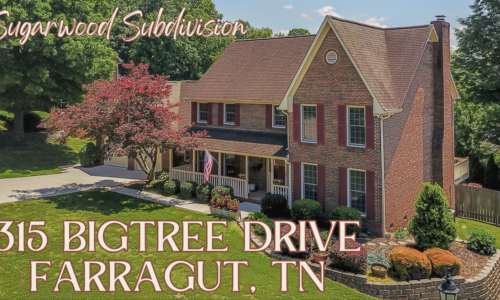
Just Listed: 315 Bigtree Drive, Farragut, TN — A Sugarwood Gem Zoned for All Farragut Schools
May 14, 2026 By Troy Stavros


If you’ve been searching for a move-in ready home for sale in Farragut, TN, your search may have just come to an end. 315 Bigtree Drive is now on the market in the beloved Sugarwood subdivision — and it is unlike anything else you’ll find in the Farragut real estate market right now.

This four-bedroom, two-and-a-half-bath home with a bonus room and two-car garage isn’t just another listing. It’s the product of nearly four decades of intentional, methodical ownership by a single original owner whose professional background as both a CPA and an engineer shaped the way this home has been maintained and improved over the years. Every update has been documented. Every investment has been purposeful. The result is a home that shows and performs like new construction — without the new construction price tag.


A Farragut Home With a Story Worth Telling

There’s a reason buyers in the Knoxville area specifically seek out homes in Farragut, Tennessee. The combination of top-rated public schools, a thriving community atmosphere, proximity to Turkey Creek shopping and dining, and well-established neighborhoods makes Farragut one of the most consistently desirable places to live in all of East Tennessee. Within Farragut, Sugarwood stands out as one of the neighborhood names that longtime residents recognize as a mark of quality, community, and location.

315 Bigtree Drive sits squarely in the heart of all of that. Built in 1986 and owned by the same family ever since, this home has never hit the open market before — which makes this a genuinely rare opportunity for buyers looking for a Farragut home with character, history, and verified condition.


Decades of Upgrades, Documented and Done Right

One of the most compelling aspects of this Farragut listing is the sheer volume of improvements that have been made over the years — and the fact that they’re all documented. From major mechanical systems to cosmetic finishes, this owner has touched virtually every corner of the home with a thoughtful upgrade.

The kitchen was fully remodeled in 2013, and a new LG convection range was added as recently as 2024. The master bath was remodeled in 2012, and all bathrooms received updates in 2019. The first-floor HVAC was replaced in 2024 with a Lennox two-ton gas package unit, and the second-floor system is a high-efficiency Coleman three-ton unit installed in 2020, meaning both systems are current and efficient. The roof and gutters were replaced in 2011, Hardie plank siding and trim were installed that same year, and Anderson replacement windows were added in 2010 — all three of which represent the kind of big-ticket investments that buyers typically negotiate around on other homes but won’t need to worry about here.

The main level features hardwood floors throughout, and in 2026 the staircase and entire second floor received brand-new carpet. A fresh coat of interior paint was also applied in 2026, meaning the home presents in truly turnkey condition. Outside, the home features a TREX sun deck rebuilt in 2011, a cedar plank privacy fence installed in 2022, a redesigned concrete driveway with integrated storm drainage completed in 2021, a full irrigation system, a Pavestone retaining wall, and thirty Emerald Green Arborvitaes that provide exceptional privacy and year-round curb appeal. Even the garage has been freshly painted.

The home is also equipped with a SimpliSafe security system, rounding out a long list of upgrades that would take most buyers years and significant money to replicate in any other property.


Sugarwood: One of Farragut’s Most Established Neighborhoods

Sugarwood isn’t just a place to live — it’s a community. The neighborhood has long been regarded as one of Farragut’s most active and welcoming subdivisions, and it’s easy to understand why once you see what it has to offer. Residents enjoy access to a neighborhood swimming pool, one of the most competitive swim teams in the greater Knoxville area, tennis courts, pickleball courts, a playground, and wide open green spaces that are perfect for everything from morning walks to weekend games.

There’s a genuine sense of belonging in Sugarwood that’s hard to manufacture in newer developments. Neighbors know each other. Kids play together. Block events happen. It’s the kind of neighborhood that makes Farragut real estate worth every penny — and it’s the kind of environment that’s increasingly rare to find.


Zoned for All Farragut Schools

For families with school-age children — or families who are planning ahead — school zoning is often the single most important factor in a home purchase in this market. 315 Bigtree Drive is zoned for all four Farragut schools: Farragut Primary School, Farragut Intermediate School, Farragut Middle School, and Farragut High School. Farragut High School in particular is consistently ranked among the top public high schools in Tennessee, and the entire feeder school system reflects the same standard of excellence that has made Farragut one of the most sought-after addresses in Knox County.

For many families, this zoning alone is enough to make the decision.


Location: The Best of Farragut at Your Doorstep

315 Bigtree Drive places you minutes from Turkey Creek, one of the premier retail and dining destinations in the Knoxville metro area, with everything from major national retailers and grocery stores to local restaurants and entertainment options. Commuter access to Knoxville via Kingston Pike and Interstate 40 is straightforward, making this an equally strong choice for remote workers and daily commuters alike.

Whether you’re relocating to the Knoxville area, upsizing, downsizing, or simply looking for a better home in a neighborhood that consistently holds its value, 315 Bigtree Drive in Farragut checks every box.


Don’t Miss This Farragut Listing

Homes of this caliber — original owner, all Farragut schools, Sugarwood subdivision, and this level of documented care and improvement — do not sit on the market long. If you’ve been searching for homes for sale in Farragut, TN, this is the one you’ll want to see first.

Contact us today to schedule your private showing of 315 Bigtree Drive, Farragut, TN 37934. Whether you’re ready to make an offer or just beginning your home search in the Farragut area, we’d love to walk you through everything this extraordinary property has to offer.


Searching for more homes for sale in Farragut, TN? Browse our current Farragut listings or contact our team to learn more about buying a home in Sugarwood and other top Farragut neighborhoods.

Filed Under: 865 Real Estate Listings, Blog, Farragut TN Tagged With: 315 Bigtree Drive, Farragut, Farragut High School zoning, Farragut real estate, Farragut Schools, Farragut TN homes for sale, homes for sale Farragut Tennessee, Knox County homes for sale, Knoxville TN, Knoxville TN real estate, move-in ready homes Farragut, REALTOR, Sugarwood Subdivision, Troy Stavros

East Tennessee Housing Market Update February 2026 | Iran Conflict, Rates UP, Oil Over $100 — What It Means for Buyers & Sellers
March 12, 2026 By Troy Stavros


Between Two Storms: What February 2026 Reveals — and Conceals — About East Tennessee Real Estate


If last month’s analysis was a story about contradictions, this month’s is a story about distortions. The February 2026 data for the Knoxville and East Tennessee housing market landed carrying a heavy asterisk — the late-January winter storm that delayed closings, inspections, and appraisals pushed a measurable volume of activity into February, inflating some numbers and obscuring others. And just as that first storm’s effects begin to clear, a second one — this time geopolitical — appeared on the last day of the month. The United States’ entry into armed conflict in Iran, which began on February 28th, introduces a new variable into the spring housing outlook that did not exist 30 days ago. And that variable is already showing up in the numbers that matter most to homebuyers: mortgage rates have climbed to 6.29% as of mid-March, and crude oil has surged past $100 a barrel for the first time in over a year.

But storms pass. Data accumulates. And when you strip away the noise and look at what February is actually telling us about this market, the signals are remarkably clear — and remarkably different depending on which county you’re standing in.

Across the six core counties — Anderson, Knox, Blount, Loudon, Roane, and Sevier — 955 homes closed in February 2026, a 9.9% increase over February 2025 and a notable acceleration from January’s 5.3% growth. But before you read that as unambiguous good news, understand that a meaningful portion of those closings were deals that should have finalized in January but were pushed into February by the storm. The true underlying pace of the market is somewhere between January’s weather-suppressed numbers and February’s weather-inflated ones. Neither month, in isolation, tells the whole story.

The Storm Effect: Why Some Counties Look Artificially Strong

The fingerprints of the late-January storm are all over February’s county-level data, but they show up unevenly.

Anderson County’s closings surged 39.5% year over year — from approximately 43 homes in February 2025 to 60 in February 2026. Loudon County jumped 37.9%, from 58 closings to 80. Those are eye-popping numbers in isolation, but both counties operate at volumes where a dozen delayed closings sliding from January into February can dramatically swing the year-over-year comparison. In Anderson’s case, the entire 39.5% increase amounts to roughly 17 additional sales. In Loudon, it’s 22. These are markets where the weather delay alone can plausibly account for most, if not all, of the year-over-year increase.

Knox County’s 14.8% increase — from approximately 440 closings to 505 — is large enough that the storm effect alone cannot explain it. At Knox’s volume, even a meaningful number of delayed closings wouldn’t produce a nearly 15% swing. Knox’s growth reflects genuine demand, confirmed by the broader suite of metrics we’ll examine below.

Then there’s Blount County, where closings fell 25% year over year — from 152 to 114. In a market where every other demand indicator is pointing in the right direction, that decline requires a different explanation entirely.

Pending Sales: The Deceleration That Isn’t a Red Flag — With One Exception

In January, the pending sales data was the headline story. Knox County pending sales had surged 38.3%, and the broader East Tennessee regional figure was up 24.7%. Those numbers pointed unmistakably toward a spring surge in activity.

February’s pending data looks tamer by comparison. Across the broader East Tennessee region — encompassing all counties, not just our six-county service area — pending sales totaled 1,654 contracts, up 7% year over year. Knox County pending sales grew just 1.9%, a sharp deceleration from January’s explosive growth. On the surface, you might wonder whether the buyer momentum is fading.

It isn’t. What you’re seeing is normalization after an anomalous January. Last month’s pending surge was partly driven by storm-delayed contracts being executed once weather cleared and activity resumed. February’s numbers represent a return to a more sustainable growth trajectory — one that still points decisively upward. A 7% increase in regional pending activity, in a market that spent much of the past two years in contraction, is healthy and constructive. You don’t need 25% growth every month for the trend to be bullish. You need consistent positive direction, and that’s what February delivered.

Knox County’s 577 pending contracts account for roughly 35% of the entire East Tennessee regional pending total — a reflection of the outsized role Knox plays as the economic and population center of the region. That share has held remarkably consistent, reinforcing Knox’s position as the market’s gravitational center.

The exception, as always, is Sevier County. And this month, the exception got worse.

Sevier County’s Pending Sales Collapse: From Concerning to Critical

In January, Sevier County’s pending sales declined 11.15% year over year. That was bad. February’s number is worse — significantly worse. Pending sales in Sevier County fell 31% compared to February 2025.

Read that again: while every other county in the dataset posted flat or positive pending activity, and while the broader East Tennessee region as a whole grew 7%, Sevier County saw nearly a third of its buyer pipeline evaporate. This is not a data quirk. This is not a storm effect. This is a market telling you — loudly and clearly — that its correction is accelerating, not stabilizing.

The forward implications are stark. Pending sales are the most reliable leading indicator we have. If the pending pipeline is contracting by 31%, the closed sale numbers two and three months from now are going to reflect that contraction. The 16% increase in February closings — likely a byproduct of storm-delayed January deals finally reaching the closing table — should not be mistaken for evidence of a turnaround. The leading indicator is moving in the wrong direction, and it’s moving there faster than it was a month ago.

Mortgage Rates: The Tailwind Is Fading

As of mid-March 2026, the 30-year fixed mortgage rate has climbed to 6.29% — a 20-basis-point jump from the roughly 6.09% level that prevailed just weeks ago, and a meaningful departure from the sub-6% territory that many market participants had been hoping for by spring. The rate stability that served as a tailwind for the market through January and February is no longer something we can take for granted.

The catalyst is not a mystery. Crude oil has surged past $100 a barrel in the wake of the U.S. entry into the Iran conflict, and energy prices at that level feed directly into inflation expectations. Bond markets are repricing accordingly, and mortgage rates — which track the 10-year Treasury yield — are moving higher in response. Two weeks ago, the question was whether rates might drift back toward 5.75% by summer. Today, the question is whether they’ll hold below 6.5%.

To put the 6.29% rate in perspective: the demand recovery documented in January and February was built on rates near 6%. Every tenth of a percentage point above that level shrinks the qualified buyer pool. On a $350,000 home with 10% down, the difference between a 6.0% rate and a 6.29% rate adds roughly $60 to the monthly payment. That may sound modest in isolation, but for buyers at the margins of qualification — and there are many of them in East Tennessee — that $60 can be the difference between an approval and a denial. Scale that across thousands of potential buyers, and you begin to see how a seemingly small rate move can meaningfully alter market dynamics.

The volume and demand improvements we’ve documented over the past two months were real. But they were also rate-dependent. If rates continue climbing — and with oil above $100 and a military conflict showing no signs of rapid resolution, there is a credible path to 6.5% or higher — the spring market’s trajectory could look very different from what the February data was projecting.

The Three-Tier Framework: Same Structure, Shifting Dynamics

The three-tier classification of the East Tennessee market that we established in January still holds in February, but the internal dynamics within each tier are evolving.

The seller’s markets — Knox County at 2.37 months of supply, Blount County at 2.58, and Anderson County at 2.86 — remain firmly below the three-month threshold. Knox tightened from 2.63 months in January to 2.37 in February, reflecting both the surge in closings and the robust demand pipeline underneath.

The balanced markets — Loudon County at 3.43 months and Roane County at 3.45 — continue to sit in that equilibrium zone. But within this tier, Roane County delivered the single biggest surprise of the entire February dataset, which we’ll explore in detail below.

The buyer’s market — Sevier County at 7.72 months of supply — worsened from January’s already elevated 7.35 months. With pending activity collapsing and supply continuing to accumulate, Sevier remains in a category by itself, and the gap between it and the rest of the region is widening.

Knox County: The Engine Keeps Running

Knox County continues to be the gravitational center of the East Tennessee real estate market. The 505 closings in February represent a 14.8% year-over-year increase, the strongest growth rate of any county at meaningful volume. Absorption tightened to 2.37 months — the tightest level in at least a year, down from 2.63 months in January.

The pending-to-active ratio of 39.1% means that for every ten active listings, roughly four already have buyers under contract. That ratio has held remarkably consistent over the past two months, signaling sustained demand rather than a one-time spike. Knox accounts for approximately 35% of all pending activity across the broader East Tennessee region, continuing its role as the dominant engine of East Tennessee real estate.

Median days on market improved from 52 in January to 40 in February, indicating that well-priced homes are moving faster as spring approaches. The sold-to-original list price ratio of 95.9% is the second-best in the region, trailing only Blount, and the 2.2-percentage-point gap between original and final list price ratios tells us Knox sellers are generally pricing within a reasonable range of market value.

Knox’s pending growth did decelerate from January’s 38.3% to 1.9% in February, but as discussed above, this represents normalization, not retreat. The absolute volume of pending contracts — 577 — remains strong, and Knox’s spring is on track to be substantially more active than a year ago. The question now is whether the rate climb to 6.29% — and potentially higher — begins to erode that buyer momentum heading into April and May.

Blount County: Strongest Fundamentals, Most Puzzling Headline

If you only looked at one number, you’d think Blount County had a terrible February. Closings dropped 25% year over year, from 152 to 114. That’s the worst closed-sale performance of any county in the dataset.

And yet, by virtually every other metric, Blount County is the best-performing market in East Tennessee — just as it was in January.

The median days on market in Blount is 28 days, the fastest of any county by a wide margin. The sold-to-original list price ratio of 96.1% is the highest in the region, meaning Blount sellers are pricing their homes more accurately than sellers in any other county. The gap between original list price and final sale price is just 1.9 percentage points — the tightest in the dataset — confirming that sellers here are not engaging in the list-high-and-cut strategy that inflates days on market and erodes negotiating leverage. Absorption sits at 2.58 months, the second-tightest in the region behind Knox.

So why did closings fall 25%? The same explanation applies here that it did in January, only more emphatically: Blount County does not have a demand problem. It has a supply problem. When homes are selling in 28 days and sellers are receiving 96.1% of their original asking price, the constraint is not on the buy side. The constraint is that there simply aren’t enough homes coming to market to sell. The 7.5% decline in pending sales — the only county besides Sevier to show a pending decline — further supports this interpretation. If there aren’t enough active listings, there can’t be enough pending contracts, and there can’t be enough closings. It’s a supply bottleneck, not a demand shortfall.

For Blount County sellers who have been waiting for the right time to list, the data is sending a clear message: the market wants your home.

Anderson County: Strong Numbers, Storm-Sized Asterisk

Anderson County’s 39.5% increase in closed sales — from approximately 43 to 60 — is the largest year-over-year percentage gain of any county. Combined with a 10.7% increase in pending sales and 2.86 months of supply, the fundamental picture is solidly in seller’s market territory.

However, at Anderson’s volume, the storm effect is nearly impossible to separate from the underlying trend. The entire year-over-year gain is roughly 17 sales. If even half of those are January closings that were delayed by weather, the organic growth rate falls to approximately 20%, which is still strong but tells a meaningfully different story. Trend data in Anderson will become more reliable once we have a month of closings that isn’t contaminated by storm-delayed activity.

The metric that continues to demand attention in Anderson is the pricing gap. Sellers are receiving 92.9% of their original asking price — a 7.1-percentage-point discount from where they started. That’s the second-worst performance on this metric in the dataset, trailing only Sevier. Anderson sellers are still overpricing, and in a market that processes only 60 sales a month, an overpriced listing doesn’t just sit — it becomes stale. Pricing discipline matters everywhere, but it matters more in Anderson than in Knox or Blount because the margin for error is so much thinner.

Loudon County: Storm-Inflated Closings, but the Foundation Is Solid

Loudon County’s 37.9% jump in closings — from 58 to 80 — is almost certainly amplified by storm-delayed January activity. Pending sales were perfectly flat year over year, and absorption at 3.43 months sits squarely in balanced territory, essentially unchanged from January’s 3.58 months.

The outlier metric in Loudon this month is the 65-day median days on market, a significant increase from January’s 42 days. Storm-delayed closings are the most likely culprit here as well. Homes that should have closed in late January but didn’t finalize until February would naturally carry a longer days-on-market figure, dragging up the county median. This should normalize in March as the storm’s ripple effects fully clear the pipeline.

The pricing data reveals a growing gap between seller expectations and buyer reality. The sold-to-original list price ratio of 93.4% means Loudon sellers are surrendering 6.6 percentage points from their original asking price — a gap exceeded only by Anderson and Sevier. The 4.1-percentage-point spread between original and final list price ratios indicates that much of this discount is happening through price reductions before offers are even received. Loudon sellers should take note: in a balanced market with adequate supply, overpricing doesn’t create leverage. It creates days on market.

Roane County: The Turnaround Nobody Saw Coming

Last month, I wrote that Roane County was the market that most concerned me heading into the second quarter. The data supported that concern — Roane had the worst sold-to-original list price ratio in the entire region at 91.5%, a weak pending-to-active ratio of 25.8%, and a trajectory that suggested it could slip from balanced territory into something less favorable.

One month later, Roane County has delivered the single most dramatic turnaround in the February dataset.

Pending sales surged 48.4% year over year — not only the largest increase of any county, but nearly seven times the broader regional average of 7%. The pending-to-active ratio jumped from 25.8% to 40.1%, which is now the highest in the entire six-county dataset — higher than Knox, higher than Blount, higher even than Anderson. The sold-to-original list price ratio improved from 91.5% to 95.2%, a 3.7-percentage-point leap that moves Roane from worst in the region to third-best. Absorption tightened from 3.68 to 3.45 months.

The one lagging indicator is closed sales, which grew only 1.8% year over year — the weakest growth in the dataset. But that’s the nature of leading versus trailing indicators. The pending surge hasn’t had time to flow through to closings yet. If March and April closings reflect even a fraction of February’s pending pipeline, Roane’s closed-sale trajectory is about to inflect sharply upward.

So what happened? The most likely explanation is that the demand wave from lower mortgage rates, which first hit Knox and Blount, has now reached Roane with a lag. Roane’s lower price points make it particularly sensitive to rate changes — the same monthly savings that brings a Knox buyer off the sidelines can make the difference between qualifying and not qualifying for a Roane buyer. It’s also possible that sellers in Roane have begun pricing more realistically, as the significant improvement in sold-to-original list price ratio suggests. Better pricing attracts more offers, which shortens days on market, which improves every downstream metric.

One month does not make a trend, and I want to be clear-eyed about that. Roane’s closed-sale growth is still the weakest in the region at 1.8%, and the county’s relatively small volume makes it susceptible to month-to-month noise. But the direction of every leading indicator shifted decisively positive in February, and that is a material change from where Roane stood 30 days ago. The concern now is that Roane’s rate sensitivity cuts both ways — the same affordability dynamics that pulled buyers in at 6% could push them back out if rates continue climbing toward 6.5%.

Sevier County: The Correction Deepens

If Roane County is the story of a market finding its footing, Sevier County is the story of a market still losing its grip.

Every critical forward-looking indicator moved in the wrong direction in February. Active listings climbed to 1,606. The absorption rate worsened to 7.72 months, up from January’s already elevated 7.35 — now approaching eight months of supply. The pending-to-active ratio collapsed to 14.8%, meaning that for roughly every seven listings on the market, only one has a buyer under contract.

The 31% decline in pending sales is the number that should define how we think about Sevier County’s trajectory heading into spring. In January, pending activity was down 11.15%. Now it’s down 31%. The decline is not flattening. It is accelerating. And this is happening in a rate environment that is pulling buyers off the sidelines everywhere else in the region.

The 16% increase in February closings — 140 sales versus approximately 121 a year ago — will tempt some to find a silver lining. Don’t. Those closings represent contracts that were written weeks or months ago, many of which were likely delayed from January by the winter storm. They tell us about the past. Pending sales tell us about the future. And the future that the pending data is pointing toward is more supply, fewer buyers, and continued downward pressure on pricing.

Sevier County sellers are currently receiving 92.1% of their original asking price, with a 3.1-percentage-point gap between original and final list price ratios. On a $500,000 cabin listing — a common price point in the Sevier market — that translates to selling for roughly $460,500, nearly $40,000 below the original asking price. And with pending activity in freefall, the sellers who are still holding firm on aspirational pricing are going to find themselves waiting well beyond the current 92-day median.

The structural oversupply problem identified in January — driven by the unwinding of the short-term rental investment boom — has not improved. Sevier County continues to carry nearly as much active inventory as Knox County despite a fraction of the population and a fraction of the organic housing demand. Until either supply contracts significantly through price reductions that attract bargain-hunting buyers, or a genuinely new source of demand materializes, this market has further to fall.

The Iran Variable: What Conflict Means for East Tennessee Real Estate

On February 28th, the United States entered into armed conflict in Iran, introducing a significant new variable into the economic and housing outlook. While the conflict had no impact whatsoever on February’s housing data — it began on the month’s final day — its potential to reshape the spring market is no longer theoretical. It is already happening.

Crude oil has surged past $100 a barrel, a level not seen in over a year, and the ripple effects are arriving exactly where economists predicted they would. Energy prices at this level feed directly into inflation expectations across the economy — from transportation costs to manufacturing inputs to the price of groceries. Bond markets, which price in future inflation, have responded by pushing yields higher. And mortgage rates, which are tethered to the 10-year Treasury yield, have followed: the 30-year fixed rate has jumped to 6.29%, up 20 basis points in a matter of weeks.

This is how geopolitical conflict transmits into your monthly mortgage payment.

The concern is not just the rate move that has already occurred, but where rates go from here. If crude oil remains above $100 — and with an active military conflict in a major oil-producing region, there is no obvious catalyst for a rapid decline — inflationary pressure will persist. If inflation expectations continue to rise, the Federal Reserve’s path toward further rate cuts becomes more constrained, and mortgage rates could push toward 6.5% or beyond. The rate environment that fueled the demand recovery of late 2025 and early 2026 is not guaranteed to hold.

Beyond rates, there is the confidence channel. Consumers facing geopolitical uncertainty tend to defer large financial commitments. A home purchase is the largest financial commitment most people will ever make, and even if rates stabilize at 6.29%, a prolonged conflict could introduce the same kind of buyer hesitation that characterized the rate-shock period of 2023 and 2024 — not because the math doesn’t work, but because the uncertainty makes people reluctant to act.

There is a counterargument worth acknowledging. Real estate has historically been viewed as a tangible, inflation-hedging asset during periods of geopolitical instability. Some buyers may accelerate their purchase timelines specifically because they want the perceived safety and stability of homeownership during uncertain times. And the East Tennessee market, with its relatively affordable price points and strong population growth fundamentals, is better positioned than many regions to weather external shocks.

The honest assessment is this: nobody knows how the conflict will unfold, how long it will last, or how deeply it will affect domestic economic conditions. What we know right now is that rates have already moved against buyers, oil prices have already moved against inflation expectations, and the comfortable assumptions of 30 days ago — that rates would hold near 6% or drift lower — are no longer operative. The data from February still tells us this market was on solid footing heading into spring. The question is how much of that footing erodes if the macroeconomic ground keeps shifting.

What This Means for Sellers in the Knoxville and East Tennessee Market

The message to sellers this month is both encouraging and urgent — and the urgency has increased since last month.

Encouraging because demand is real. Across most of the region, buyers are active, pending sales are growing, and absorption rates are tightening. If you’re in Knox, Blount, or Anderson, you are in a seller’s market with genuine competitive dynamics working in your favor.

Urgent because the window may be closing faster than expected. Mortgage rates have already climbed 20 basis points in a matter of weeks. Oil is above $100. A military conflict is underway with no clear timeline for resolution. None of this means the market is about to collapse — the supply fundamentals in the core counties are too tight for that. But it does mean that the conditions sellers are enjoying right now — strong buyer demand, favorable rates, and positive momentum — are not guaranteed to persist through the summer. Sellers who have been waiting for prices to climb higher are making a bet that the favorable conditions of the past few months will continue despite a fundamentally altered macroeconomic backdrop. That is a riskier bet today than it was 30 days ago, and it was a riskier bet 30 days ago than it was 60 days ago.

If you’re planning to sell in 2026, there’s a strong argument that the spring window — right now — offers the most favorable combination of demand, rates, and buyer activity that you’re likely to see this year.

Pricing discipline remains paramount. The spread between the best and worst sold-to-original list price ratios in February is 4.0 percentage points — Blount’s 96.1% versus Sevier’s 92.1%. On a $400,000 home, that gap represents $16,000. The counties where sellers price accurately — Blount and Knox — are the counties where homes sell fastest and where sellers retain the most value. That correlation has been consistent across every month of data I’ve analyzed, and it is not a coincidence. In a rate environment that is moving against buyers, pricing accuracy becomes even more critical — an overpriced listing that might have eventually attracted an offer at 6% may simply expire at 6.5%.

What This Means for Buyers in the Knoxville and East Tennessee Market

For buyers, February’s data reinforces the geographic divergence that has defined this market for months — but the rate move adds a new layer of urgency across the board.

In Knox County and Blount County, you are competing for limited inventory in a tightening market. Sub-three-month supply, fast days on market, and strong pending pipelines mean that hesitation costs you homes. Come prepared, come pre-approved, and come realistic about pricing. A market with 2.37 months of supply and a 39% pending-to-active ratio is not the market for contingency-laden, below-asking offers.

In Sevier County, the negotiating leverage continues to shift in the buyer’s direction — and the shift is accelerating. With pending activity down 31%, supply approaching eight months, and sellers already accepting 92.1% of original asking prices, the room to negotiate is significant and growing. For buyers with a long-term investment horizon and the patience to weather a market that has likely not yet bottomed, Sevier County’s pricing becomes more compelling with each passing month. But enter with eyes wide open — the pending data is telling us this correction has further to run.

Roane County, which looked like a cautionary tale four weeks ago, is now worth a second look. The 48.4% surge in pending activity and improved pricing metrics suggest that Roane may be entering a more competitive phase. Buyers who were enjoying relatively relaxed conditions in Roane should be aware that the dynamics are shifting — though rising rates could moderate that shift if they begin to push Roane’s rate-sensitive buyers back to the sidelines.

The wildcard for buyers across all markets is the rate trajectory. At 6.29% and climbing, the math is getting tighter for many households. Waiting for rates to fall further — a strategy that worked beautifully in late 2025 — now carries substantially more risk. With oil above $100 and a military conflict introducing persistent inflationary pressure, the next move in rates is more likely to be up than down in the near term. Buyers who are qualified and ready today should weigh the cost of waiting not just against the possibility of lower rates, but against the increasingly real possibility of higher ones. Locking in at 6.29% may feel disappointing compared to the 6% that was available weeks ago, but it could look attractive compared to what’s available in June.

Spring 2026 Forecast: The Window Narrows

Heading into January, the story was straightforward: rates were improving, buyers were returning, and the spring setup looked favorable across most of the region. Heading into March, the story has grown considerably more complicated — and the complications are arriving faster than anticipated.

The domestic fundamentals of the East Tennessee housing market have not changed. Demand is positive. Absorption is healthy in most counties. Pending activity is growing. The seller’s market counties are tightening. Even Roane County, last month’s biggest concern, is showing genuine signs of life.

But the external environment is deteriorating in real time. Crude oil above $100. Mortgage rates at 6.29% and rising. An active military conflict in a major oil-producing region with no clear exit strategy. The housing market doesn’t exist in a vacuum, and macroeconomic shocks have a way of rippling through real estate markets with a lag of roughly 60 to 90 days. The shock began on February 28th. By late April or May, we’ll know whether it was a temporary disruption or a structural shift in the rate and inflation landscape.

The spring forecast, then, is this: if rates stabilize near 6.29% and do not climb meaningfully higher, the East Tennessee market — outside of Sevier County — still has the fundamentals to deliver a solid spring. The pending data supports that. The absorption data supports that. The supply constraints in Knox, Blount, and Anderson are real enough to prevent a significant slowdown even with modestly higher rates.

If rates push past 6.5% — which is a realistic scenario if oil remains above $100 and inflation expectations continue to rise — the spring could look very different. Not a collapse in the core counties, where supply is too tight for that, but a meaningful deceleration of the momentum that has been building since late 2025. The buyer pool that returned to the market at 6% is not the same buyer pool that remains at 6.75%. Every quarter-point increase thins the herd.

Sevier County’s spring is going to be difficult regardless of what happens with rates or geopolitics. A market with nearly eight months of supply and an accelerating decline in buyer activity does not need an external shock to continue correcting. It’s doing that on its own. Rising rates only make it worse, as they erode the purchasing power of the bargain hunters and investors who represent Sevier’s best near-term hope for demand.

The advice for everyone operating in this market — buyers, sellers, agents, and investors — is the same as it’s been, just with added emphasis: know which market you’re in, price to reality, and don’t build your strategy on assumptions that require everything to break in your favor. The February data tells us where this market was heading. The March rate environment tells us that the path just got steeper. The window for action hasn’t closed — but it is narrower than it was a month ago, and it may be narrower still a month from now.


Filed Under: Blog, Farragut TN, Home Buying, Home Market News, Home Selling, Tellico Village Tagged With: Anderson County TN homes, Blount County real estate, Buying a home in Knoxville, east tennessee homes for sale with acreage, East Tennessee market update, east tennessee real estate, Farragut, Housing Market, is now a good time to buy a house, Knox County homes for sale, Knoxville housing market 2026, Knoxville real estate agent, Knoxville TN, Loudon County real estate, mortgage rates 2026, oil prices housing market, Roane County TN property, Sevier County housing market, Sevier County short term rentals, spring housing market 2026, Tellico Village, tennessee home prices, Tennessee housing market update, Troy Stavros

Knoxville & East TN Real Estate Market Update: Year-End 2025 Review & 2026 Outlook

January 9, 2026 By Troy Stavros


Happy New Year! As we close the book on 2025, the Knoxville and East Tennessee real estate markets are telling a fascinating story of normalization, returning balance, and new opportunities.

If 2025 was the year the market took a breath, 2026 is shaping up to be the year it finds its footing—especially with major news regarding mortgage rates hitting the headlines just yesterday.

Here is your comprehensive breakdown of the December 2025 numbers, a full-year review, and my top predictions for what lies ahead in 2026.

The Big Picture: Knoxville vs. East Tennessee

Overall, 2025 moved us toward a more balanced feel. Inventory is up, homes are taking longer to sell, and buyers finally have room to negotiate. However, the city and the region are behaving differently.

Knoxville: Strong Finish, Softening Prices

Knoxville had a dramatic finish to the year.

  • Sales: Up 12.5% year-over-year in December.
  • Inventory: Skyrocketed by 31.6%.
  • The Surprise: Despite the activity, pricing softened. The median sold price dipped 5% in December to $380,000.

Knoxville remains a tighter market than the region (2.9 months of supply), but the pricing dip suggests sellers are adjusting to the new reality.

East Tennessee: Building Momentum

The broader region is showing signs of a very strong start to 2026.

  • Pending Sales: While Knoxville pendings were up 6.1%, East Tennessee’s pending sales jumped 19%.
  • Balance: The region sits at 4.4 months of supply, making it a more balanced environment where buyers have genuine leverage.

Surrounding County Breakdown (Data Cards Below)

Real estate is hyper-local. To understand where the market is going, we have to look at the specific counties we serve. Here is how the numbers shook out for December and the full year of 2025.

Roane County

Roane is seeing a surge in activity, likely driven by spillover demand from Knoxville and lake-access lifestyle buyers.

  • The Data: Inventory is up 23.6% and pending sales jumped 14% in December.
  • Pricing: You might see a headline that prices jumped 25% in December, but don’t let that fool you. That is likely a “mix shift” (more expensive homes selling that month). The full-year appreciation is a steady, modest 3.17%.
  • The Takeaway: Roane is catching demand. Expect moderate appreciation and solid traffic in 2026.

Knox County

Knox County, the metro anchor, is showing clear signs of normalization.

  • The Data: Inventory is up significantly—nearly 29% year-over-year in December, with pending sales also up almost 10%.
  • Pricing: Despite the increased options and returning buyers, price growth is mild: median sales price rose just under 2% in December, and the full-year gain was just above 2%.
  • The Takeaway: This suggests a market that’s regained balance after the ultra-competitive years, with more choices for buyers and steady, sustainable price trends. Knox is still the area’s bellwether—more inventory, more buyers coming back, but prices are stabilizing rather than surging.

Anderson County

Anderson is the “Supply Leader” right now.

  • The Data: Inventory jumped 37.4% in December—the largest increase in this group.
  • Pricing: Prices held up (up 3.92% in Dec), but full-year growth was only 1.22%.
  • The Takeaway: Supply is rising faster than demand here. If rates drop, Anderson has the inventory to absorb buyers without instantly turning into chaos. It is currently a very buyer-friendly market.

Loudon County

Loudon remains the higher-priced, hybrid market catering to move-up buyers and retirees.

  • The Data: Pendings were up 15.7% in December, showing strong demand.
  • Pricing: The median price sits at $497,000.
  • The Takeaway: Loudon is payment-sensitive. Turnkey homes sell well, but dated or oddly located homes are sitting. Expect a “split market” in 2026 where condition dictates success.

Sevier County

Sevier is our most unique animal due to the investment and second-home dynamic.

  • The Data: Pendings were up a massive 22.74% in December.
  • Pricing: Full-year price growth was modest at 2.22%.
  • The Takeaway: This market is highly sensitive to interest rates. If rates stay low, Sevier could re-accelerate quickly, but pricing will depend heavily on investor appetite.

Blount County

Blount is the “Sleeping Giant” that just woke up.

  • The Data: Pending sales surged 38.8% in December—the biggest jump in the region.
  • Pricing: Prices remained flat (up roughly 1%).
  • The Takeaway: This is a classic sign of a heating market. Demand is surging, but buyers still have enough negotiating room to keep prices from spiking. If this momentum carries into Spring, expect a faster sales pace.

Community Spotlights: Farragut, Lenoir City, & Tellico Village

(Data Cards Below)

  • Farragut: Still supply-constrained. Sales were up nearly 47% in December. If rates drop, Farragut will feel it through competition.
  • Lenoir City: Acting like a healthy, balanced market. If rates drop, Lenoir City will feel it through affordability, as more buyers will qualify for loans.
  • Tellico Village: A lifestyle market. 2025 was much more balanced than 2024. If rates drop, Tellico will feel it through momentum and a strong Spring start.

The Game Changer: Mortgage Rates Drop to 5.99%

Just yesterday, we received major news: President Trump announced a push for Fannie Mae and Freddie Mac to purchase $200 billion in mortgage-backed securities.

The market reacted instantly. The 30-year fixed rate dropped to 5.99% today.

This is the first time we have seen a rate start with a “5” since 2023. This is a massive psychological barrier. Whether you are buying, selling, or refinancing, this changes the math and the mindset heading into 2026.

5 Predictions for the 2026 Housing Market

Based on the 2025 data and this new rate environment, here is what I expect:

  1. Buyers Will Re-Enter the Market: It’s not just about affordability; it’s about confidence. At 5.99%, buyers who have been on the sidelines will return.
  2. Pendings & Closings Will Improve: East TN already has pending momentum. Lower rates will convert those contracts into closings.
  3. Inventory Won’t Vanish: We have more inventory than a year ago. Even with higher demand, I don’t expect the shelves to clear overnight.
  4. Prices Will Stabilize: The price softening we saw in December (especially in Knoxville) should level out. We aren’t going back to double-digit appreciation, but we should see steady, modest growth.
  5. The “Split Market” Continues: Even with lower rates, buyers are picky. Updated, move-in-ready homes will fly. Overpriced or dated homes will still need price cuts.

The Bottom Line

2025 was a year of normalization. 2026 looks like a year of opportunity.

If rates hold at these levels, the pace of the market is going to change quickly. Strategy matters now more than ever. If you are thinking about buying or selling this year, let’s start planning now so you can take advantage of this shift.

Have questions about your specific home or neighborhood? Reach out to Cornerstone Realty Associates today.


Filed Under: Blog, Farragut TN, Home Buying, Home Market News, Home Selling, Tellico Village Tagged With: 2026 housing market predictions, Anderson County real estate, Blount County real estate update, buy a home in Knoxville, East Tennessee Housing Inventory, East Tennessee real estate trends, Knoxville home prices December 2025, Knoxville home sales data, Knoxville housing market 2025, Knoxville mortgage rates 2026, Knoxville pending home sales, Knoxville Real Estate Forecast, Knoxville real estate news, Knoxville TN, Knoxville vs East Tennessee market, Loudon County home prices, real estate agent, Roane County housing market, Sell a home in East Tennessee, Sevier County housing trends, Tennessee county real estate report, Tennessee real estate update, Troy Stavros

Is the Knoxville Real Estate Market Finally Returning to Normal?
December 29, 2025 By Troy Stavros

If you have been following my recent market updates, you’ve likely heard me use one word repeatedly: Normalizing.

For the last few months, I have sensed a shift in the Knoxville real estate landscape. The frantic pace of the pandemic years has settled, and we are moving toward stability. Now, new data from First American confirms exactly what we’ve been seeing on the ground.

In this video, I break down a recent report from First American’s Chief Economist that highlights why Knoxville is leading the pack in the return to a balanced housing market.

The Key to Unlocking the Housing Market: New Listings

The article I reference in the video focuses on a crucial metric: New Listings.

While active inventory can increase simply because homes are sitting on the market longer, new listings represent fresh supply. This “flow” of new homes is vital because it gives buyers real options and stimulates transactions. As the Chief Economist at First American notes:

“Where new listings grow, sales flow.”

The data suggests a strong optimism for 2026. As more homeowners choose to list their properties, buyers will have more opportunities to purchase, moving the entire market one step closer to balance.

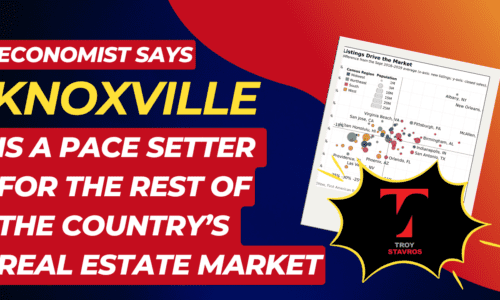
The 4 Quadrants of Normalization: Where Does Knoxville Stand?

First American analyzed 75 major metropolitan markets, comparing their October 2025 performance against their pre-pandemic averages (October 2018–2019). They divided these markets into four quadrants based on how close their new listings and sales volume were to “normal.”

The results for our local area are incredibly encouraging.

Knoxville is a “Pacesetter”

Knoxville, Tennessee, landed in the upper-right quadrant, designated as a Pacesetter.

What is a Pacesetter?
Pacesetters are markets that are closer to their pre-pandemic norms for both new listings and sales volume than the typical market.

Along with cities like Pittsburgh and Virginia Beach, Knoxville is leading the national return to normalized activity. This quadrant features markets that generally offer relative affordability compared to the rest of the country.

What This Means for Buyers and Sellers in Knoxville

This report cements what I have been saying for months: While things are slowing down compared to the peak frenzy, we are not crashing—we are normalizing.

  • For Sellers: The market is active, and sales are responding to the improved supply. You are entering a market that is functioning closer to historical health.
  • For Buyers: The increase in fresh listings means you have more choices. The “Pacesetter” status indicates that transactions are flowing, making it a great time to enter the market.

Summary

The data is clear: Knoxville is a leader in the housing recovery. We are seeing a healthy return to pre-pandemic levels of activity, which provides stability for everyone involved in a real estate transaction.

If you have questions about how this “Pacesetter” status affects your home value or your ability to buy in 2026, please don’t hesitate to reach out.

Troy Stavros
Cornerstone Realty Associates
Knoxville, TN

Filed Under: Blog, Home Buying, Home Market News, Home Selling Tagged With: buying a house in knoxville, First American housing report, housing affordability Knoxville, housing market forecast 2026, Knoxville housing market 2026, Knoxville market update, Knoxville real estate market, knoxville realtor, Knoxville TN, Knoxville TN homes for sale, moving to Knoxville TN, real estate inventory trends, real estate market normalization, REALTOR, Selling a home in Knoxville, Tennessee real estate trends, Troy Stavros, Troy Stavros real estate

East Tennessee & Knoxville Housing Market Update SEPTEMBER 2025: Prices, Trends, and Buyer-Seller Insights
October 10, 2025 By Troy Stavros

Are you a homeowner, buyer, or seller looking to understand the latest trends in the East Tennessee and Knoxville housing market? As we approach the end of 2025, market conditions have shifted, interest rates are making waves, and submarkets like Farragut, Lenoir City, and Tellico Village are showing unique patterns. Here’s everything you need to know to navigate the Knoxville real estate market this fall.


Knoxville Housing Market 2025: Cooling but Not Crashing

After years of rapid price growth and frenzied bidding, the Knoxville housing market in 2025 is undergoing a noticeable transformation. Inventory has surged by over a third compared to last year, and homes are staying on the market longer—almost double the days compared to 2024. Sales volume is down nearly 8% year-over-year, and the median home price is now essentially flat, even dipping slightly in some neighborhoods.

Key Takeaway for Home Sellers:
Knoxville sellers must be strategic with pricing and flexible on concessions, as buyers have more options and are no longer rushing to make offers.


East Tennessee Real Estate: A More Resilient Picture

While Knoxville proper is feeling the pinch, East Tennessee’s real estate market as a whole remains resilient. Median prices are up 2-3% year-over-year, and pending sales have benefited from a temporary dip in mortgage rates this fall. Outlying areas such as Lenoir City, Loudon County, and Roane County are seeing steady or even rising demand, absorbing much of the new inventory and maintaining price growth.

Key Takeaway for Buyers:
If you’re priced out of Knoxville, expanding your search to the broader East Tennessee market—especially growing towns and counties—can offer better value and more affordable monthly payments.


Why Outlying Areas Are Booming: Affordability Shifts Demand

One of the biggest trends of 2025 is that outlying communities are capturing buyers who might otherwise have purchased in Knoxville. As the city’s median price outpaces regional averages, many buyers are looking to suburbs and nearby towns for better deals.

  • Farragut: With its top-rated schools and amenities, Farragut remains in demand. However, rising prices and inventory mean homes are staying on the market longer despite a 30% jump in pending sales after the recent rate drop.
  • Lenoir City: This value-driven hotspot is attracting buyers with newer homes and reasonable commutes to Knoxville. Inventory is up, but homes are selling quickly, making for a competitive market.
  • Tellico Village: Known for its active-adult community and lakefront living, Tellico Village is experiencing a surge in inventory and a dip in median sale price, giving buyers more choices and negotiating power—especially for homes needing updates.

Key Takeaway for Investors:
Strong demand in Lenoir City and Farragut, as well as lifestyle-driven buyers in Tellico Village, make these submarkets worth watching for potential appreciation and rental opportunities.


The Role of Mortgage Interest Rates

Mortgage rates have been the wild card in the Knoxville and East Tennessee housing market. Earlier this fall, rates dipped briefly to just over 6%, sparking a surge in pending sales. However, any further increases could dampen both buyer demand and price growth, particularly in Knoxville, where affordability is stretched.

Key Takeaway for Buyers & Sellers:
Watch interest rates closely—lower rates could mean more competition and firmer prices, while higher rates might extend days on market and open the door to negotiation.


Knoxville Real Estate Forecast Through 2026

Looking ahead, the consensus among local experts is that the Knoxville real estate market will continue to normalize. Expect prices to remain flat or post only modest gains, with some neighborhoods possibly seeing slight declines. The broader East Tennessee market, however, is expected to show more resilience, especially in growth corridors and popular commuter towns.

Tips for Success:

  • Buyers: Expand your search radius to include outlying areas for more options and better deals.
  • Sellers: Be realistic about pricing, and consider offering concessions or updates to attract buyers.
  • Homeowners: If you’re not in a rush to move, waiting for rates to drop could bring more favorable selling conditions.

Final Thoughts: Navigating the East Tennessee & Knoxville Housing Market

Whether you’re buying, selling, or simply monitoring property values, staying informed about local trends is essential in a shifting market. Knoxville is correcting faster than the region, but East Tennessee remains a strong bet for homeowners and investors. Keep an eye on interest rates and be ready to act quickly when the right opportunity arises.

Ready to make your move?
For the latest Knoxville and East Tennessee market updates, tips for home buyers and sellers, and expert real estate advice, subscribe to our newsletter or contact us today!


East Tennessee housing market September 2025

Knoxville housing market September 2025

East Tennessee counties  housing market September 2025

Farragut TN housing market September 2025

Lenoir City TN housing market September 2025

Tellico Village housing market September 2025

Filed Under: Blog, Farragut TN, Home Buying, Home Market News, Home Selling, Tellico Village Tagged With: Buying a home in Knoxville, east tennessee homes for sale, East Tennessee market update, East Tennessee Property Values, East Tennessee real estate trends, Farragut housing market, Knoxville home prices, Knoxville home seller tips, Knoxville housing market 2025, Knoxville inventory trends, Knoxville Real Estate Forecast, lenoir city real estate, real estate agent, Tellico Village homes, Tennessee mortgage rates, Troy Stavros

East Tennessee & Knoxville Housing Market Update – August 2025
September 14, 2025 By Troy Stavros


Are you curious about the current real estate trends in Knoxville and East Tennessee? Whether you’re considering buying, selling, or investing, understanding the latest market shifts is essential for making the right move. Here’s a comprehensive, data-driven look at the August 2025 housing market update for East Tennessee and Knoxville, including prices, inventory, and expert insights.


East Tennessee & Knoxville Single-Family Housing Market Report – August 2025

Economic & Market Context (Applies to Both Markets)

  • Mortgage rates have dropped to the low 6% range (~6.29%), improving affordability and monthly payments for buyers.
  • Labor market data is a growing concern: National job growth over the past year was revised sharply lower, with only 22,000 jobs added in August and significant downward revisions in sectors like leisure, hospitality, retail, and business services.
  • Buyer confidence is mixed—improved by rate relief but tempered by employment insecurity.
  • Inventory is elevated across markets, providing buyers with more choices and reducing urgency.
  • Days on market and absorption rates are increasing, signaling a slower pace of sales and movement toward a more balanced or slightly buyer-leaning market.
  • Negotiability is up: Sale-to-list ratios are lower, and price reductions/concessions are more common.
  • Lending standards may tighten further due to economic uncertainty, limiting access for marginal buyers.

Supply, Demand & Pricing Dynamics (Shared Trends)

  • Active inventory is high vs. last year, keeping upward pressure off prices and giving buyers leverage.
  • New listings remain steady, showing seller engagement, but not enough to create excess supply.
  • Median sale prices are flat to modestly up, while average sale prices have been buoyed by upper-tier transactions.
  • Absorption rates are trending higher YoY, indicating more choices and slower turnover.
  • Days on market for sold listings have increased substantially, especially for homes not priced to current conditions.
  • Sellers must be realistic on pricing and incentives; buyers can negotiate more assertively, especially on stale listings.

Knoxville vs. East Tennessee: Key Differences & Local Nuance

1. Inventory, Absorption & Market Speed

  • Knoxville
    • Absorption rate: 2.94 months (Aug 2025), up 34% YoY—still somewhat seller-leaning but moving toward balance.
    • Active listings: ~1,600, with steady but not excessive new supply.
    • Average Days on Market: 46 (+35% YoY); Median DOM: 22 (+83% YoY).
    • Market is slightly faster than the broader East Tennessee region (which has a 4.82 month absorption rate and longer DOM), but both are slowing.
  • East Tennessee (Region-Wide)
    • Absorption rate: 4.82 months (Aug 2025), up 27% YoY—close to balanced, potentially tipping buyer-friendly if demand softens.
    • Average DOM: 63 (+37% YoY); Median DOM: 29 (+45% YoY).
    • More pronounced inventory build and slower pace overall vs. Knoxville.

2. Pricing Trends

  • Knoxville
    • Median list price: $415,000 (down 7.4% YoY).
    • Average sale price: $512,654 (up 10.5% YoY).
    • Median sale price: $390,888 (up 1.5% YoY).
    • Pricing reflects a sharper correction in list prices, with average sale price buoyed by upper-tier deals, but most sellers see little real appreciation.
  • East Tennessee
    • Median list price: $440,000 (nearly flat YoY).
    • Average sale price: $471,398 (up 6.8% YoY).
    • Median sale price: $376,200 (up 3.1% YoY).
    • List prices haven’t corrected as much as Knoxville, but the pattern of average prices outpacing median is similar, reflecting strength at the top of the market.

3. Negotiation & Sale-to-List Ratios

  • Knoxville
    • Sale-to-list ratios: 95–97% (lower than last year), with frequent discounts needed to close.
    • Median sale prices are often below median list prices, showing persistent buyer leverage.
  • East Tennessee
    • Sale-to-list price ratio: ~95%, also down YoY.
    • Negotiability is common across the region; sellers of aging inventory must stay flexible.

4. Market Segmentation & Buyer Behavior

  • Knoxville
    • Entry-level and mid-market segments ($250k–$400k): Most sensitive to job market fears; these buyers benefit from rate relief but are often sidelined by economic uncertainty.
    • Upper-tier sales ($400k+): Drive the average price higher, but volume is limited.
    • Homes priced right and move-in ready move fastest; stale inventory is slow to clear.
  • East Tennessee
    • Similar segmentation: Entry and mid-market buyers are most impacted by job and lending trends.
    • Upper-tier strength is evident but less concentrated than in Knoxville.
    • Market is generally a bit slower and more diverse across submarkets.

5. Risks & Outliers

  • Knoxville
    • List price declines are more pronounced than region-wide, suggesting sellers are adjusting expectations faster, or a higher share of affordable product is coming to market.
    • Market is less exposed to deep softening than some rural/outlying counties, thanks to more diversified local demand.
  • East Tennessee
    • Outlying areas may see greater inventory buildup and longer marketing times, especially if job losses are concentrated in specific towns or industries.
    • Region is somewhat more vulnerable to further economic shocks, particularly outside major metros like Knoxville.

Strategic Guidance for Both Markets

For Buyers

  • Assess job security and financial stability first—don’t overextend.
  • Negotiate confidently on older or price-reduced listings.
  • Take advantage of lower rates, but ensure full pre-approval and keep contingencies in place.

For Sellers

  • Price to current market—not to last year’s peak.
  • Expect longer marketing times and be ready for strategic concessions (rate buydowns, closing credits).
  • Invest in property condition and presentation to stand out.

For Investors

  • Underwrite with conservative rent and absorption projections.
  • Favor stable neighborhoods and properties with strong rental demand.
  • Prepare for higher vacancies or longer lease-up periods.

Outlook: What to Watch Through Year-End 2025

  • Pending sales and mortgage applications: Early signals for shifts in demand.
  • Local job market trends: Especially important in entry-level and service sectors.
  • Inventory build and price reductions: Especially if list prices keep falling in Knoxville.
  • Market speed: Any further rise in DOM or absorption signals softening.

Conclusion

Both Knoxville and the broader East Tennessee region are experiencing a market in transition, balancing improved affordability against weaker labor market data and rising inventory.

  • Knoxville is adjusting more quickly on price and remains a touch more resilient due to diverse demand, but is not immune to broader economic headwinds.
  • East Tennessee as a whole is trending toward a balanced or slightly buyer-leaning market, with greater risk of softening in less urban submarkets.
  • Success for buyers, sellers, and investors in either market hinges on realism, flexibility, and close attention to both local and macroeconomic trends as the remainder of 2025 unfolds.

Looking for advice specific to your neighborhood or price point?
Contact us for a custom market report or subscribe for monthly updates on Knoxville and East Tennessee real estate!


Filed Under: Blog, Farragut TN, Home Buying, Home Market News, Home Selling, Tellico Village Tagged With: 2025 housing trends, absorption rate East Tennessee, August 2025 real estate update, buying a home Knoxville, CornerStone Realty Associates, days on market Knoxville, east tennessee housing market, Farragut, Farragut TN housing market, Home buying, Housing Market, Knoxville, Knoxville home prices, Knoxville housing market, new construction knoxville, real estate agent, REALTOR, selling a home East Tennessee, Tellico Village Real Estate, Tennessee, Troy Stavros

  • 1
  • 2
  • 3
  • …
  • 42
  • Next Page »

CALL or TEXT 865-999-0925

  • Email
  • Facebook
  • Instagram
  • LinkedIn
  • Phone
  • Twitter
  • YouTube
Create A Real Estate Portal
Register today for better user experience! With a portal you are able to:
  1. Save your searches
  2. Get updates on listings
  3. Track listings
  4. Add notes and messages
  5. Personalize your dashboard
Search Knoxville Real Estate

RECENT BLOG POSTS

  • East Tennessee Housing Market Update – April 2026: County-by-County Breakdown
  • Just Listed: 315 Bigtree Drive, Farragut, TN — A Sugarwood Gem Zoned for All Farragut Schools
  • Discover the Clinch River Lodge: An Extraordinary East Tennessee Riverfront Property
  • 711 Hunting Fox Lane, Farragut, TN: A Luxury Listing in Fox Run with Smoky Mountain Views, High-End Updates, and a Private Wooded Retreat
  • East Tennessee Housing Market Update — March 2026: What Buyers and Sellers Need to Know Right Now

CALL / TEXT ME @ 865-999-0925

  • Email
  • Facebook
  • LinkedIn
  • Twitter
  • YouTube
  • Privacy Policy

Copyright 2024 - Troy Stavros - CornerStone Realty Associates, LLC - 865-966-9700 - 12748 Kingston Pike Suite 206, Knoxville, TN 37934 *Some or all of the listings displayed on this site may not belong to CornerStone Realty Associates, LLC. IDX information is provided exclusively for consumers’ personal, non-commercial use, and may not be used for any purpose other than to identify prospective properties consumers may be interested in purchasing. All data is deemed reliable, but is not guaranteed.